The Psychology of Color in Web Design

Colour shapes how people feel about your business before they read a single word. Most websites get this wrong by accident. Here's how to use it deliberately.
The psychology of colour in web design
A visitor lands on your website and forms an opinion in less than a second. Before they read your headline, before they see your services, before they find your contact button.
Colour is doing most of that work.
It's not decoration. It's communication. And on the Costa Blanca, where your visitors might be Dutch, British, Spanish, or German, colour communicates something slightly different to each of them. Getting it right matters.
What colours actually say
Colours carry associations built up over years of exposure. Most people feel them without being able to name them. That's exactly why they work.
Blue signals trust and calm. Banks, insurance companies, and law firms use it for a reason. For B2B businesses, consultancies, and professional services on the Costa Blanca, blue is a safe and effective choice. It tells a visitor they're in reliable hands before they've read a word.
Red creates urgency and draws attention. Used sparingly on a button or a limited-time offer, it works well. Used everywhere, it feels aggressive. The key word is sparingly.
Yellow and orange feel warm and approachable. Hospitality, food, creative businesses. They work well on the Costa Blanca where the market skews toward leisure and lifestyle. But they need a grounding colour alongside them, or they tip into feeling informal.
Green connects with nature, health, and balance. Wellness, coaching, sustainability. In the right context it feels calm and trustworthy. In the wrong context it just feels generic.
Neutral tones (white, light grey, warm beige) create space and let other elements breathe. Real estate websites on the Costa Blanca often benefit from neutral backgrounds: the property photos do the talking, the design stays out of the way.
The mistake most businesses make
They pick colours they personally like rather than colours that speak to their clients.
A luxury villa rental business on the Costa Blanca doesn't need the same colour palette as a family-friendly activity centre in Benidorm. Both can be well designed. But the colours that signal "premium and discreet" are different from the colours that signal "fun and welcoming."
The question to ask isn't "do I like this?" It's "how does this make my ideal client feel when they land on my site?"
Contrast and consistency matter as much as the colours themselves
Good contrast between text and background isn't a design preference. It's a readability requirement. Low contrast makes text hard to read, and hard to read means people leave.
Consistency matters just as much. If your primary button colour changes across pages, visitors lose the visual cue that tells them where to click. Every button should look the same. Every section header should use the same colour. That repetition is what trains the eye.
A practical approach
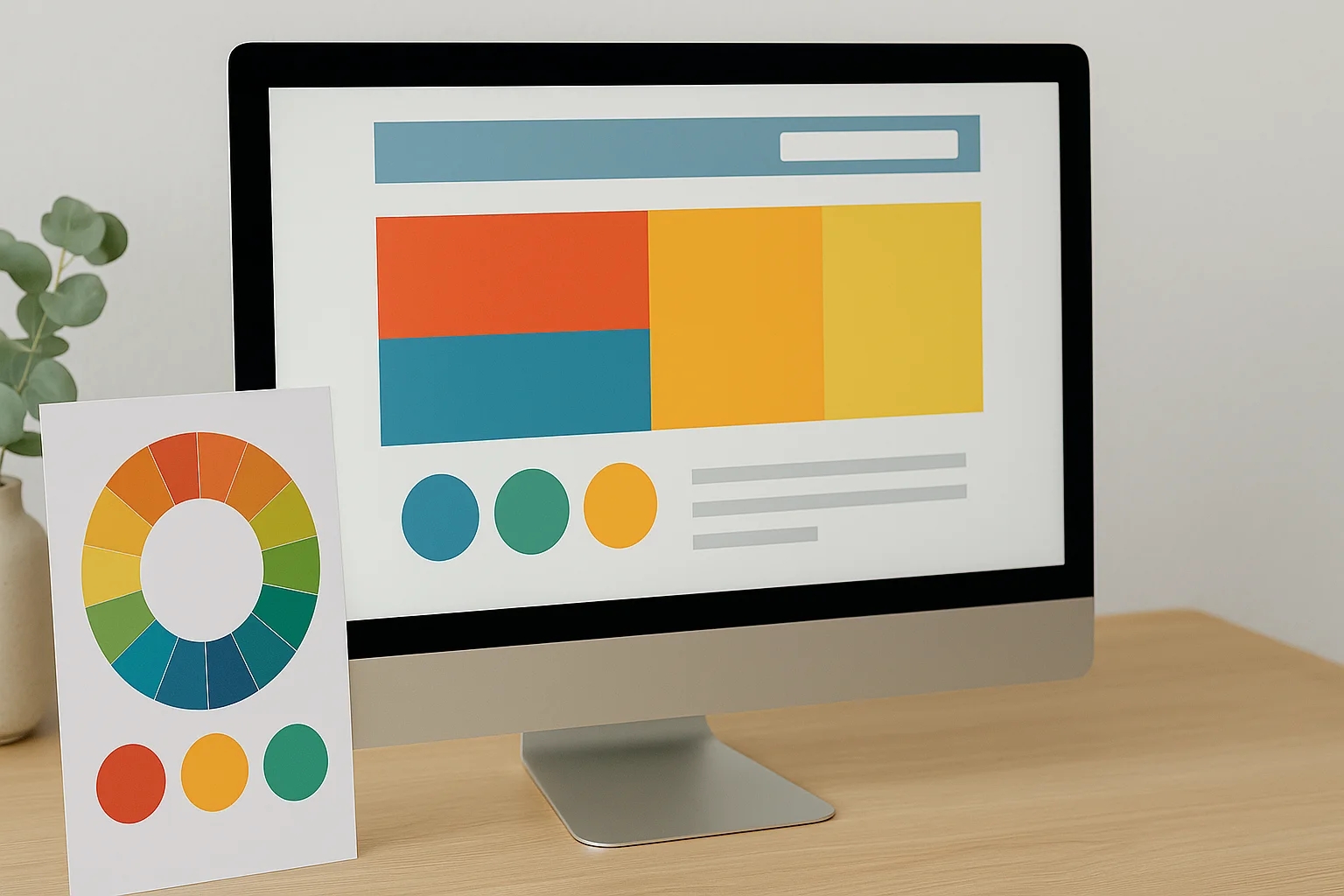
Pick one primary colour that reflects your brand and your audience. Add 1 or 2 accent colours that complement it without competing. Keep the rest neutral.
Tools like Adobe Color and Coolors help you find combinations that work together. But no tool replaces the judgement call: does this feel right for this business, in this market, for this client?
That's why colour decisions are part of every site I build on the Costa Blanca. The palette comes after understanding the business and the audience, not before.
If you want to talk through what a colour palette for your specific business might look like, send me a message on WhatsApp.
Read more: